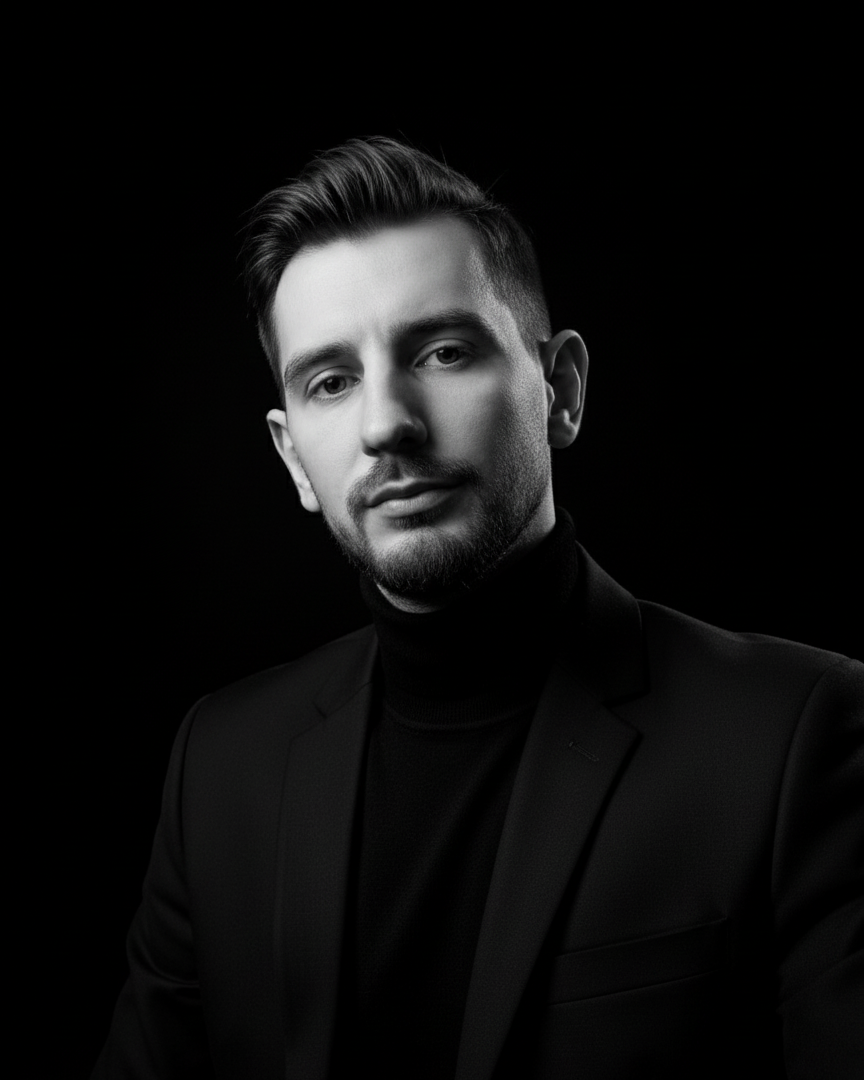
I pair technical depth with a structured approach to work, health, learning, and decisions.
Day to day, I work on backend, architecture, cloud, security, and AI. Around that, I build habits that help me make calmer decisions, learn faster, and check what's actually working.
Engineering
Backend, architecture, cloud, security, and thinking through the business domain.
Making decisions
I look for the real constraint first. Then I take the smallest useful step and check the result.
Life outside work
Training, recovery, learning, money, and relationships - I treat them as one thing, not separate boxes.
Backend
Architecture
Cloud
Security
Observability
AI
Mentoring
more than 10 yearsbuilding, running, and improving production systemsArchitecture, cloud, securitythe foundation from day one, not a fix at the endAI, mentoring, systems thinkinghelp me and my teams learn faster and decide better
How I work
One person, the whole stack.
This isn't about doing everything by hand. It's about seeing the whole system and knowing where my work matters most.
Broad skills, one directionBroad skills only help when they're organized.
Product, technology, communication, automation, workflow, and physical condition all affect each other. The better I understand how they connect, the faster I find the real problem.
Product thinking
I start with the problem.
User, constraints, risk, and the decision that matters come first. Technology, screens, and automation come after.
Engineering
I build systems that work, not just ones that look good.
Backend, cloud, security, and the data model need to hold up under real production use, team handoffs, and time.
AI in practice
I automate repetitive work.
Tools and AI should take tedious work off my plate and speed things up. They don't replace my responsibility for the decisions.
Energy and recovery
I'm part of the system too.
Training, sleep, recovery, and focus are part of my work, because decision quality depends on the state of the person making them.
Current idea
整
DOUSATSU / Observation
Observation before action
A good move only becomes clear once I actually understand the situation.
My path
Five ideas, one path.
These are Japanese concepts I translate into projects, daily habits, decisions, and how I keep growing.
DOUSATSU / Observation
I observe first.
Before acting, I look for the real cause of a problem - in the code, the product, the team, and myself.
Dousatsu is more than looking at symptoms. On a project, it means reading logs, data flows, system boundaries, and user needs before proposing an architecture. In life, it means checking my energy, attention, and rest before forcing another plan on myself.
Constraints
Signals
Root causes
KAIZEN / Improvement
I improve in small steps.
Kaizen keeps me grounded: narrow the change, ship it, check the result.
In code, I'd rather make changes that lower risk and make work easier than do one big rewrite. The same rule applies to training and everyday life: steady, small progress beats rare, dramatic changes.
Iteration
Metrics
Review
SHOKUNIN / Craft
Craft means responsibility.
Shokunin means caring about what's still there long after the first impression fades.
On a project, that's clear system boundaries, easy maintenance, security, observability, and a clean handover to the next person. In life, it's the basics done properly: sleep, training, learning, money, and relationships handled with care, not on impulse.
Maintainability
Discipline
Consistency
MONOZUKURI / Making
I make things that are worth making.
Monozukuri connects making something with usefulness and respect for the people who'll use it.
I'm not interested in technology for its own sake. A product, an automation, a training plan, or a daily routine should make life easier and keep working long after it stops being new.
Usefulness
Durability
Respect
Ikigai
As a generalist, I bring many fields together into one direction.
For me, ikigai is a decision filter, not a motivational slogan.
I look for projects and habits where what interests me, what I'm good at, what people need, and what actually creates value all line up. That's how work and everyday life end up pointing the same way, instead of being two separate things.
My principles
Broad skills only matter if the result is good.
I work across disciplines not to look busy, but because the best decisions come from where product, technology, energy, and real feedback meet.
01
I take responsibility for the whole picture.
I don't stop thinking at the code. The problem, the user experience, the architecture, the maintenance cost, the rollout, and whether the system actually helps someone - all of it matters.
02
I care about quality in every detail.
A good product isn't just technically correct. It needs clear structure and details that make the whole thing feel like a deliberate choice, not an accident.
03
Discipline is my edge.
Engineering, training, learning, writing, and AI reinforce each other when they have structure. It's not about doing more - it's about organizing the work better.
Contact
If you think about systems the same way, we have something to talk about.
We can talk about architecture, mentoring, a project, a product, or how I work. The best conversations start with a real problem.
With your consent, I use Google Analytics 4 to collect basic usage metrics. Declining does not limit access, and you can change your decision later in privacy settings.